radiomuseum.org
 

National Electronics Museum and System Source Computer Museum

21031 Hunt Valley, MD, USA (Maryland)

Anschrift 338 Clubhouse Road
 
 
Ausstellungsfläche - leider noch nicht bekannt  
 
Museum Typ Ausstellung
Radio und -Kommunikation allgemein
  • Schreib- Rechen- und Codiermaschinen
  • Fernsehen und Bildaufzeichnung
  • Röhren / Halbleiter (aller Art)
  • Optik
  • Telefon / Telex
  • Computer / Informatik
  • Drucktechnik
  • Morse-Technologie
  • Radar
  • Radio Amateur / Militär- / Industrie-Funk


Öffnungszeiten
Public Tours: Monday, Wednesday, Friday: 10:30, by appointment only.

Eintrittspreise
Stand von 01/2026
Adults: $15; Students, Youth: $10
Your admission is valid for both museums!

Kontakt
Tel.:+1-443-345-1390  Tel.2:+1-410-771-5544 x 4336  
eMail:nemuseum gmail.com
museum syssrc.com  
 

Homepage www.nationalelectronicsmuseum.org
museum.syssrc.com/

Unsere Seite für National Electronics Museum and System Source Computer Museum in Hunt Valley, USA, ist noch nicht von einem RMorg-Mitglied betreut - bitte schreiben Sie uns über Ihre Erfahrungen mit dem Museum, Korrekturen des Eintrags oder senden Fotos mit diesem Kontaktformular an den Museumsfinder.

Lage / Anfahrt
N39.486009° W76.662824°N39°29.16054' W76°39.76944'N39°29'9.6324" W76°39'46.1664"

In 2023, the museum closed at its Linthicum site, and has of 2024 relocation to Hunt Valley, Maryland, where it is adjacent to the Computer Museum at System Source.

Modellseiten von Gerätebeispielen, die Sie dort sehen:

D: Gemeinschaftserzeugn Enigma (1938)
USA: Adams-Morgan Co. Paragon RA-10 (1920)
USA: Westinghouse El. & Detector-Amplifier DA (1921)
USA: MILITARY U.S. BC-312-L (1936-60)
USA: Hallicrafters, The; Skyrider SX-23 (1939)
USA: Hallicrafters, The; UHF-Receiver S-27 (1940-43)
USA: MILITARY U.S. BC-342-(*) (BC342) (1940??)
USA: MILITARY U.S. SCR-300 BC-1000 (1943-61??)
USA: Precision Apparatus Tube Tester 620 (1947)
USA: Bendix Radio 847S "Facto Meter" (1947)
USA: Scott Radio Labs.E.H Projection Televison Receiver 6T11 (1948?)
USA: Westinghouse El. & H-196 (1949?)

Röhrenseiten von Gerätebeispielen, die Sie dort sehen:

Triode Hoch- Vakuum DV2 (1923)
Triode Hoch- Vakuum UV199 (1922)
Triode Hoch- Vakuum UV201 (1920-22)
Triode Hoch- Vakuum UV201A (1922)
Triode Hoch- Vakuum UX199 (1925-31)
Triode Hoch- Vakuum UX201A (1925)
Triode Hoch- Vakuum VT-1 (1917)
Sende-Triode, luftgekühlt VT-2 (1918)
Triode Hoch- Vakuum WD12 (1923-26)
Reflex Klystron WL-417A
Thyratron 4C35
Strahlbündel-Endröhre 4-1000A
Sende-Tetrode, luftgekühlt 5D21
Impuls-Magnetron 725A
SENDEROEHRE allg 8D21
Sende-Triode, luftgekühlt 833A
Sende-Tetrode, luftgekühlt 861

Beschreibung

National Electronics Museum

Permanent Exhibits

The National Electronics Museum has nine permanent exhibitions and one rotating temporary exhibit. The galleries display breakthroughs in electronic history in the areas of communications, radar, countermeasures, electro-optical, underwater and satellites.

Fundamentals Gallery

Use our hands on equipment to generate electricity and experiment with magnetism.
Learn how electromagnetic waves power our cell phones, cook our food, and help us see into space.
Become part of a human battery

Communications Gallery

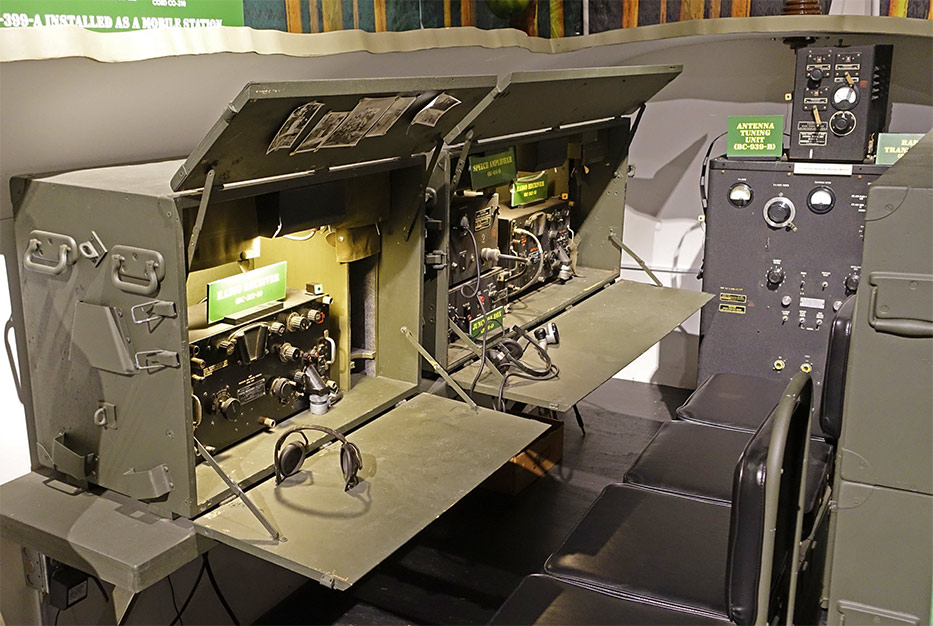
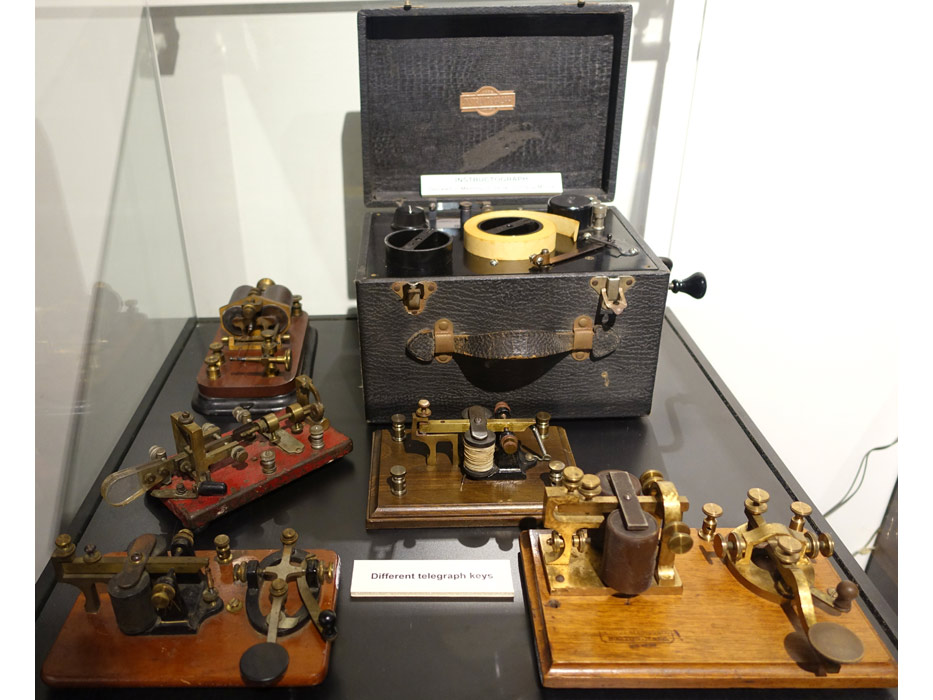
The development of the Morse telegraph and the Bell Telephone.
Marconi's pioneering wireless experiments.
Reproduction of an early amateur radio spark gap "shack".
An operational amateur radio station (operated by the Amateur Radio Club of the National Electronics Museum/K3NEM) capable of worldwide communications by voice, Morse code, digital modes, and television.
The AN/PRD-1 in the Vietnam War: Early in the Vietnam War Army Security Agency forces were deployed “in country” with the AN/PRD-1 Direction Finder to find and track enemy insurgents. Learn how the use of technology in war time became a battle with the technology itself.

Early Radar/WWII Gallery

Learn how the British built a radar to detect enemy aircraft in the late 1930's.
See the type of radar that detected the attack on Pearl Harbor on December 7, 1941.
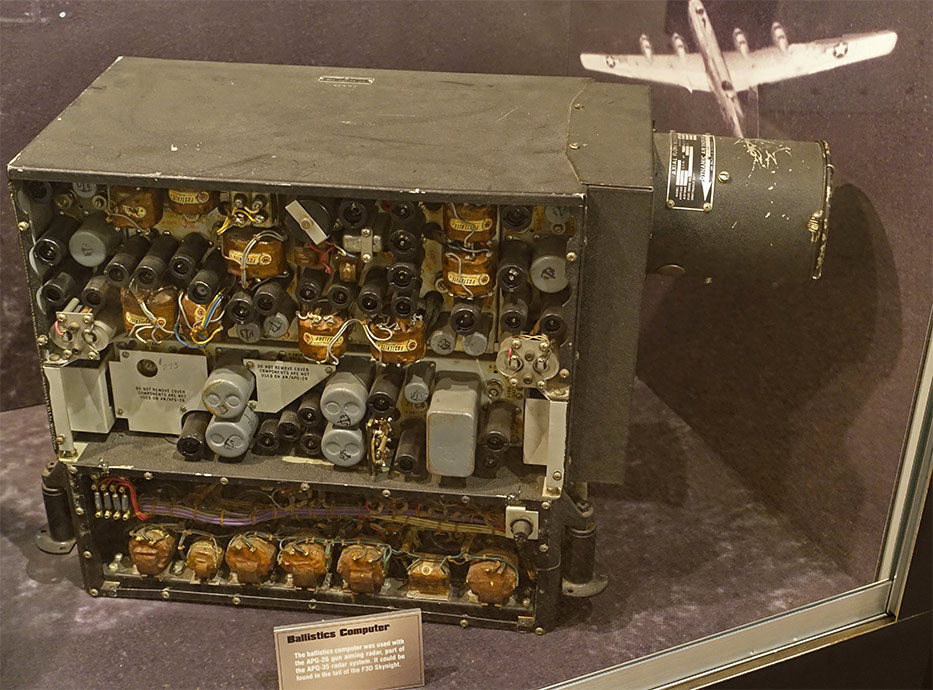
See the American radar-controlled anti-aircraft gun that fired shells packed with electronics to shoot down the buzz bombs launched against London in World War II.
Read descriptions of Allied and German radars used in World War II

Cold War Radar Gallery

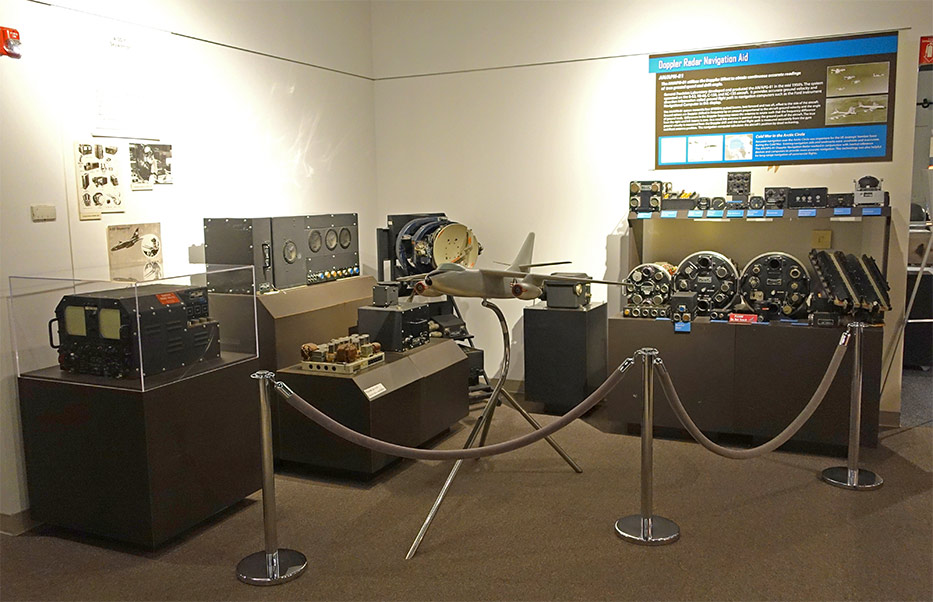
See a U.S. Navy shipborne fire-control radar.
Learn how radar led to the household microwave oven.
Learn how Doppler radar would be used to direct American missiles toward Soviet bombers.
See how the Doppler effect was adapted to measure the speed of your car.
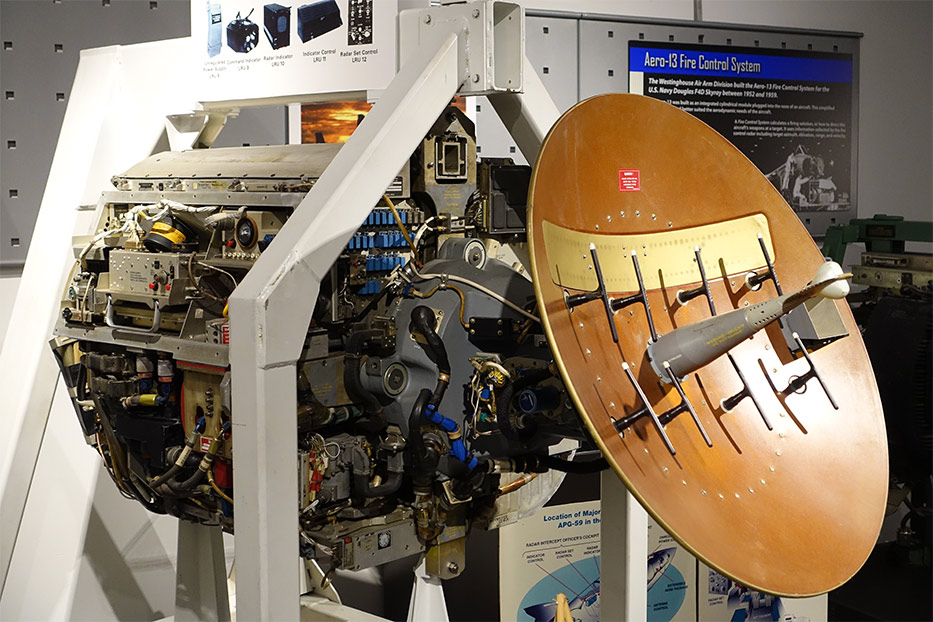
See Air Force and Navy airborne fire-control radars.
Learn how side-looking radars developed in the 1950's could map the ground in all kinds of weather.

Modern Radar Gallery

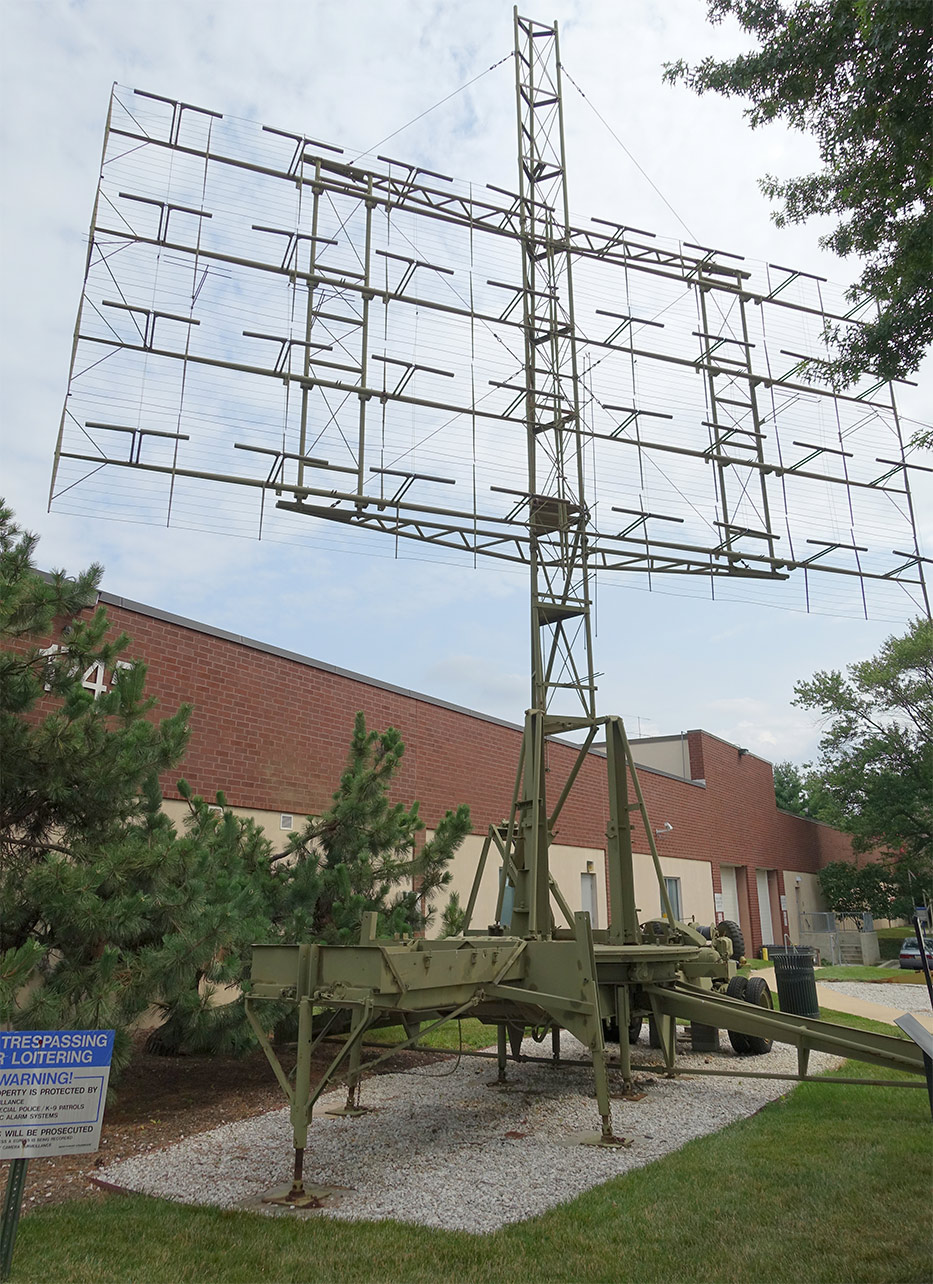
A TPS-43 ground based tactical surveillance radar in an outside exhibit area.
An AWACS antenna including a mock-up of the radome.
Radar tracks of incoming flights at BWI Thurgood Marshall Airport.
A hands on demonstration of phased array beam steering.

Countermeasures Gallery

See World War II Army Air Force and U.S. Navy jamming and receiving gear.
Hear an enemy SA-2 (SAM) missile lock on to its target.
Learn how chaff and decoys are used to fool enemy radar.
Examine modern multi-configurable counter measure pods.

Underseas Gallery

Fundamentals of underwater sound transmission.
Air-dropped sonobuoys.
Interactive demonstration of passive and active underwater sounds.
Display of antisubmarine warfare systems and future Bow Conformal SONAR arrays.
"Shadowgraph" towed vehicle for imaging mines using acoustics.

Electro-optical Gallery

See the famous Norden bombsite of the WWII era.
Explore the inner workings of the Pave Spike system.
See yourself in infrared!

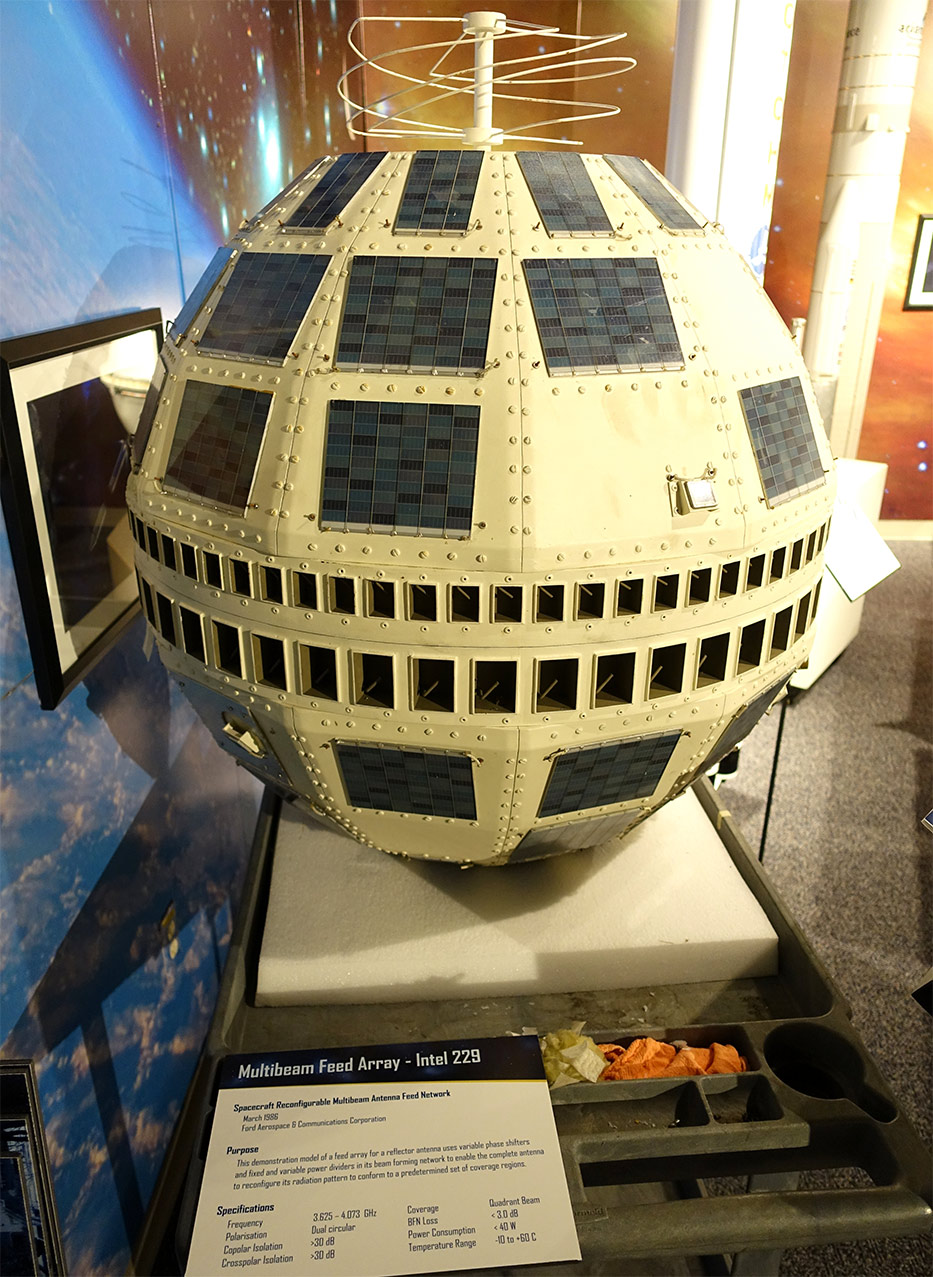
Satellites: Transforming Our Lives Gallery.

See a 1:1 scale model of the Boeing 702SP Satellite.
Explore the Satellite Hall of Fame on one of several touch screens in the gallery.


Beschreibung
(other)

Wikipedia:
System Source Computer Museum
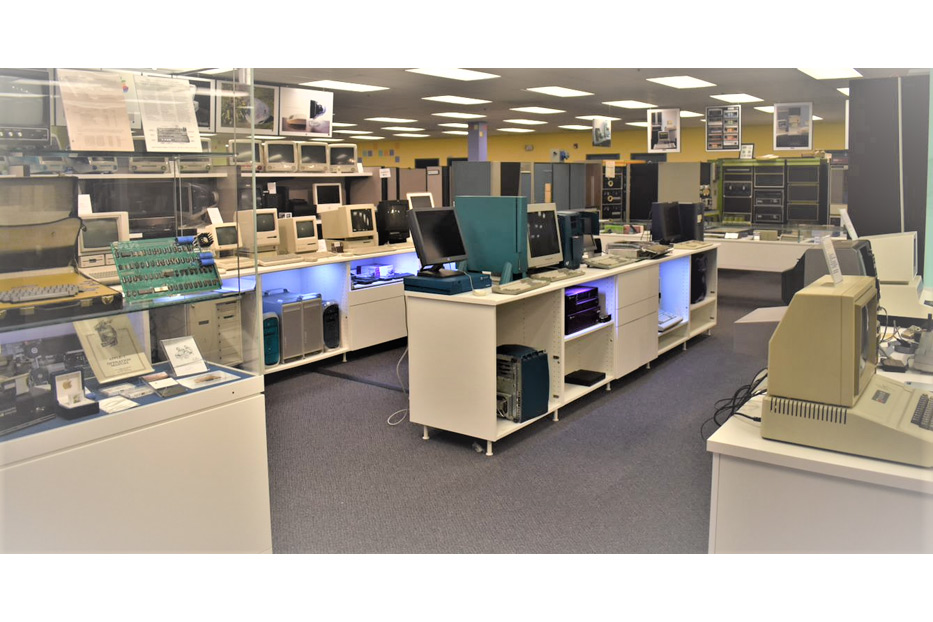
exhibits notable computing devices from ancient times until the present. Over 5,000 objects are on display and many of the computation devices are operational.

Exhibits

Apples: Apple 1, Apple II, Apple ///, Apple Lisa and most other Apple products

Control Data Corporation: CDC 160 Series

Cray computers: Cray-1, Cray-2, Cray T90

DEC computers: PDP-5, PDP-8, LINC[4] PDP-12, VAX

Computer memory: Delay-line memory Magnetic-core memory

Kenbak-1: Kenbak-1

Pre-industrial computers: Abacus, Quipu, Napier's bones, slide rule

Tic-Tac-Toe and computers: Charles Babbage's research on the game, Relay Tic Tac Toe Machine, Matchbox Educable Noughts and Crosses Engine (MENACE)

UNIVAC: UNIVAC 490, UNIVAC 418

Xerox: Xerox Alto[6]

IBM: Two IBM System/360 Model 20s on long-term loan from a private collection in the UK.[7]


Das Radiomuseum.org zeigt Ihnen hier eine der zahlreichen Museumseiten, damit Sie sich über das Museum rasch informieren und es direkt kontaktieren können. Dabei finden Sie in der Übersicht (Link oben rechts) die Gesamtheit der im Museumsfinder veröffentlichten Museen, die sich mit Radios und verwandten Gebieten befassen - sehr grosse und sehr kleine, öffentliche und private - weltweit.

[dsp_museum_detail.cfm]


Datenkonformität Mehr Informationen